

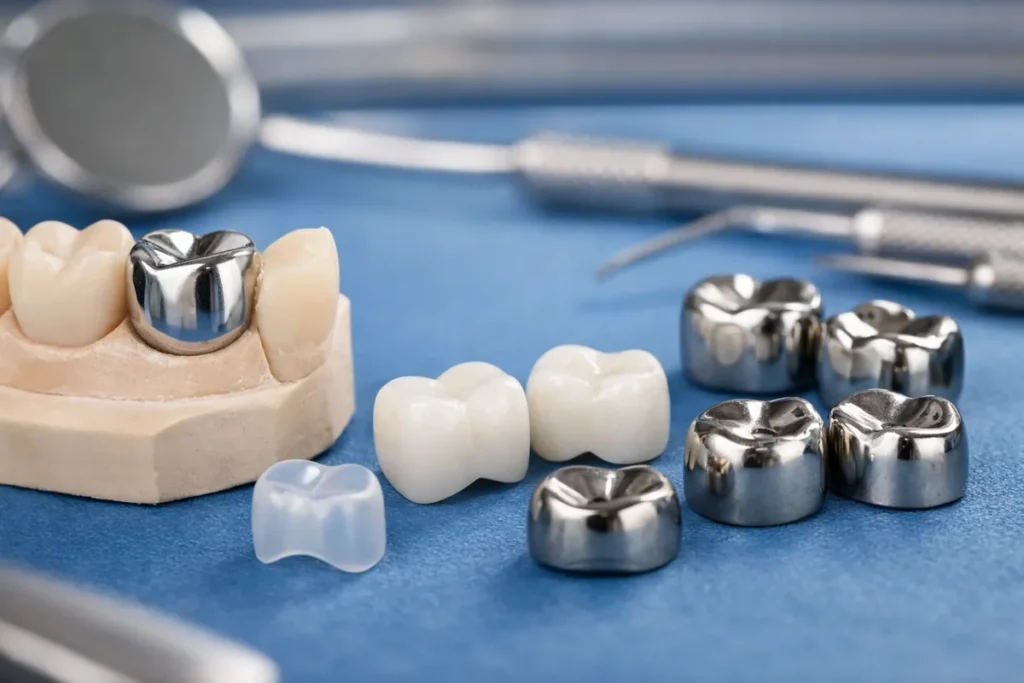
Your child needs a crown, and now you are weighing a silver cap against a white one. It is a normal thing to feel unsure about.
A stainless steel crown suits back molars best, where chewing force is high and the metal color barely shows. A white zirconia crown suits front teeth, where a natural look matters most. Both protect a baby tooth until it falls out on its own. The right pick depends on which tooth is damaged, your child’s bite habits, and your budget.
At our Pediatric Dental Clinic in Wheat Ridge, Dr. Ngo, DDS, and Dr. Afsaneh Noori, DDS, place both crown types. Both are pediatric dentists who take a whole-child view, so the tooth in front of them is never the only thing they look at.
Key Takeaways for Parents
- Stainless steel crowns go on back molars. They resist chewing force and rarely break before the tooth falls out.
- White zirconia crowns go on front teeth. They match your child’s natural color so the crown blends in.
- Stainless steel crowns cost about $300 to $500 per tooth. Zirconia crowns cost about $500 to $1,000.
- Both types stay on the tooth until the baby tooth comes out on its own, often several years.
- Ask which tooth needs the crown first. That answer usually settles the material question for you.
Why Would a Baby Tooth Need a Crown at All?
A baby tooth needs a crown when decay or a fracture is too large for a filling to hold. Crowns cover the whole tooth, so they work where a filling would crack or fall out. Dentists also crown teeth after a baby root canal, called a pulpotomy. Protecting that tooth keeps your child out of pain and holds space for the adult tooth underneath.
Parents often ask why any of this matters if the tooth falls out anyway. The answer is that a decayed baby tooth can still cause real pain and infection. It also guides the permanent tooth into place. Lose it too early, and the adult tooth can drift or come in crooked.
The American Academy of Pediatric Dentistry sets no minimum age for a crown on a baby tooth. Dentists place them on children as young as two years old when a cavity covers more than one surface.
Stainless Steel Crowns, in Full
A stainless steel crown is a silver metal cap that fits over a whole baby tooth. Dentists have used them since the 1950s, and they hold up under heavy chewing better than any tooth-colored option. Most pediatric dentists place them on back molars, where strength counts more than color and the cap sits out of view.
Here is what makes stainless steel the workhorse of pediatric crowns:
- Strong: It resists cracking and chipping, even in kids who grind their teeth.
- Fast: The cap comes pre-formed, so one visit is usually enough.
- Affordable: It costs less than a zirconia crown.
- Proven: The AAPD names stainless steel as the preferred crown for badly decayed baby molars.
The clear trade-off is the look. The cap is silver, so it shows on any tooth near the front of the smile. For a molar in the back, most families never notice it.
A 2025 study published in the journal Children followed 138 baby molars and found stainless steel crowns stayed on far better than zirconia, with a 3 percent loss rate compared with 16 percent.
White Zirconia Crowns, in Full
A white zirconia crown is a tooth-colored ceramic cap that blends with your child’s natural teeth. It is the go-to choice for front baby teeth, where a silver cap would show in every photo and every smile. Made from zirconium dioxide, it resists staining and looks close to a real tooth.
Zirconia earns its place on the front teeth for a few reasons:
- Natural look: It matches surrounding teeth, so many parents cannot pick out the crowned tooth.
- Stain-resistant: It holds its color better than older resin caps.
- Biocompatible: The ceramic is gentle on the gums and rarely irritates them.
There are honest downsides. Zirconia is more brittle than steel, so it can chip under a hard bite. It also needs more tooth trimming to fit, since the ceramic wall is thicker.
That same 2025 study in Children found zirconia crowns came loose more often than stainless steel over about two years. For a front tooth that does light biting, that risk is low. For a heavy-chewing molar, it matters more.
Which Crown Wins on Each Feature?
Both crowns protect the tooth until it falls out. The split comes down to location, strength, and cost. This table lays the two options next to each other.
| Feature | Stainless Steel Crown | White Zirconia Crown |
|---|---|---|
| Best tooth | Back molars | Front teeth |
| Appearance | Silver, visible up front | Tooth-colored, blends in |
| Strength | Very high | Good, can chip under hard bite |
| Tooth trimming | Minimal | More |
| Visits | Usually one | Usually one, longer chair time |
| Cost per tooth | About $300 to $500 | About $500 to $1,000 |
| Retention | Higher | Slightly lower |
What Does a Crown Cost, and Does Insurance Help?
A stainless steel crown runs about $300 to $500 per tooth without insurance. A white zirconia crown runs about $500 to $1,000. Most dental plans treat a crown as major restorative care and pay around 50 percent after your deductible. Your annual maximum, often $1,000 to $2,000, caps how much comes back in a year.
The white upgrade catches families off guard. Some plans pay the stainless steel rate and ask you to cover the difference for zirconia. Ask your plan two things before the visit:
- The covered percentage for crowns.
- Whether tooth-colored crowns on baby teeth count as a covered material.
Kid Focus Dentistry accepts Medicaid and CHP+, along with major dental plans. For families paying part of the bill themselves, CareCredit financing spreads the cost over time. Bring your insurance card to the first visit and the team can check your coverage before any treatment starts.
Keep in mind that a crown is one line on the bill. If the tooth also needs a baby root canal first, that gets billed on its own. Ask for an all-in estimate up front so the final number holds no surprises.
How Do You and the Dentist Decide Together?
The tooth’s location decides most of it. A back molar almost always gets stainless steel for strength. A front tooth almost always gets zirconia for looks. When a tooth sits in between, your child’s bite habits and your budget break the tie.
A few questions help you and the dentist land on the right call:
- Which tooth is it? Front teeth lean zirconia, molars lean steel.
- Does your child grind or chew hard objects? Grinding favors steel.
- Does your child have a metal sensitivity? That points toward zirconia.
- What does your plan cover? Coverage can shift the math on the white upgrade.
There is no wrong parent here. Both crowns are safe, and both work well for children. The goal is a tooth that stops hurting and stays put until nature takes it.
One more thing worth knowing. Crowns often come up right after a baby root canal or when several teeth get treated under sedation in one visit. In those cases, the dentist may lean toward stainless steel on the molars for the sturdiest long-term result, since redoing a crown means another appointment for your child.
Talking It Through with Kid Focus Dentistry in Wheat Ridge
Choosing a crown for your child is easier when someone walks you through the options in plain language. At Kid Focus Dentistry in Wheat Ridge, serving families across Wheat Ridge and Arvada, Dr. Ngo and Dr. Afsaneh Noori look at the whole child, not just the tooth. Kids anxious about the visit can start with the Scarries pre-treatment program, which lowers dental fear before the appointment even begins.
The team speaks English, Spanish, and Vietnamese, so you can ask every question in the language you are most comfortable with. To talk through your child’s crown options, call Kid Focus Dentistry at (303) 543-8338.